Brother
Male sibling sharing one or both parents.

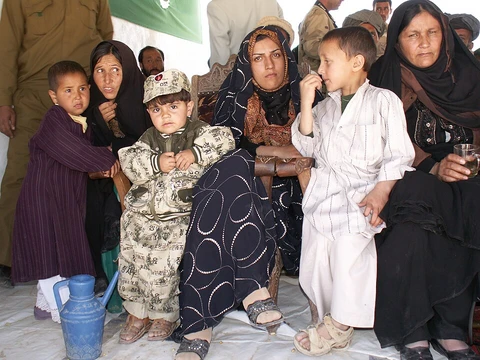
Mona Abo-Abda · CC BY-SA 4.0
A brother is a man or boy who shares one or more parents with another, making him a male sibling. The term can also be used endearingly for non-familial relationships. A full brother is considered a first degree relative.
- definition
- Male sibling
- counterpart
- Sister
- etymology
- From Proto-Indo-European *bʰréh₂tēr, Latin frater
- degree_of_relation
- First degree relative (full brother)
- notable_effect
- Older brothers may delay menarche in sisters by roughly one year
Lore & Background
The term brother originates from the Proto-Indo-European *bʰréh₂tēr, which became Latin frater. Research indicates that sibling warmth between brothers is correlated with more risk-taking behavior, a phenomenon not observed in other sibling pairs. The cause remains unclear, but studies suggest sibling warmth does not serve as a protective factor against risk-taking, unlike sibling conflict which is a risk factor. In the Nicomachean Ethics, Book VIII, Aristotle described the fraternal relationship as one of comradeship and likeness, noting that brothers belong more to each other and start with love from birth. He argued that the older brother should influence the younger brother's ethics by being a person of good action, as the younger brother imitates and reenacts those acts, forming habits that become difficult to break. Additional research notes that the likelihood of being gay increases with the number of older brothers a man has. A woman's attractiveness to a heterosexual man may increase if he resembles her brother, while dissimilarity may decrease attractiveness. Females with a twin or close-in-age brother sometimes view him as their male alter ego.
Reader's Guide
The concept of brotherhood carries both biological and social significance. Biologically, a brother is a first-degree relative, and studies have explored unique effects such as older brothers delaying menarche in sisters and increasing the likelihood of homosexuality in younger brothers. Socially, Aristotle's ethical framework positions the older brother as a model for the younger brother's moral development, emphasizing imitation and habituation. The finding that sibling warmth between brothers correlates with risk-taking behavior—unlike in other sibling pairs—highlights a distinctive dynamic that remains unexplained. This suggests that while conflict is a risk factor, warmth does not protect against risk-taking in brother pairs. The term also extends metaphorically to non-familial relationships, reflecting its broader cultural use. Overall, the brother relationship is a foundational human bond with implications for development, behavior, and identity.
Did You Know?
- Higher sibling warmth in brother pairs is correlated with more risk-taking behavior, a finding not seen in other sibling pairs.
- Girls with an older brother may experience a delay in the onset of menarche by roughly one year.
- The likelihood of being gay increases with the number of older brothers a man has.
- Aristotle's Nicomachean Ethics states that the older brother should influence the younger brother's ethics by being a person of good action.
Origins & Taxonomic Place
The Sudanese kinship system—sometimes called the descriptive system or bifurcate collateral kinship—was formally identified by the anthropologist Lewis Henry Morgan in his 1871 publication, Systems of Consanguinity and Affinity of the Human Family. Morgan's framework placed it among six major kinship systems recognized in cross-cultural anthropology, alongside the Inuit, Hawaiian, Iroquois, Crow, and Omaha types. The name itself is a nod to the peoples of South Sudan, among whom this pattern of family classification was observed. What sets the Sudanese model apart from its five siblings in Morgan's taxonomy is its insistence on granular, individualized labels: rather than lumping several relatives under a single word, it carves out a distinct term for nearly every person in Ego's extended family. This makes it the most elaborate of the six systems and the one that most closely mirrors the way many modern speakers actually think about who is who in a large family network.
Anatomy of the System
The Sudanese model is widely regarded as the most intricate of all kinship typologies. Its core principle is specificity: almost every relative of Ego receives a unique designation determined by that person's distance from Ego, the nature of the relationship, and the relative's gender. In certain cases, relative age further subdivides the terminology. The system draws a sharp line between the patrilineal and matrilineal sides of the family. Ego's father is not the same category as Ego's father's brother, and neither is the same as Ego's mother's brother. The same logic applies on the maternal side: mother, mother's sister, and father's sister each get their own label. When the system reaches the cousin generation, the combinatorial possibilities explode, yielding as many as eight distinct terms for what English collapses into the single word cousin. A two-generation diagram of the system typically uses circles for female relatives and triangles for males, with color-coding to show which individuals share a kinship label.
Geographic & Cultural Footprint
Although the system bears the name of South Sudanese peoples, its reach extends far beyond that region. Historical evidence indicates that the Sudanese pattern was present in ancient Latin-speaking societies and in Anglo-Saxon culture, suggesting a deep antiquity. In the modern world, it persists among Arab, Turkish, and Chinese-speaking communities, and within the Germanic family it survives in Swedish. Anthropologists note a recurring correlation: the Sudanese system tends to appear alongside patrilineal descent rules and is frequently described as characteristic of complex, socially stratified societies. This co-occurrence implies that the granular labeling of relatives is not merely a linguistic quirk but may serve social functions in hierarchical or lineage-based communities, where knowing exactly which branch of the family a person belongs to carries practical consequences for inheritance, obligation, and status. The breadth of its distribution—from the Mediterranean to East Asia, from the Germanic north to the Arab world—underscores how widely this particular solution to the problem of family classification has been adopted across unrelated language families.
Linguistic Variants Across the World
No two languages implement the Sudanese template identically. In Arabic, the system is nearly complete, yet female relative terms are typically just the grammatical feminine of the male equivalent (khālah for maternal aunt versus khāl for maternal uncle), and no distinction is drawn between paternal and maternal grandfathers (both jadd) or grandmothers (both jaddah). Balkan languages such as Bulgarian, Serbian, and Bosniak differentiate patrilineal from matrilineal uncles but merge the two aunt categories; Croatian and Macedonian go further, collapsing the children of uncles into a single term. Finnish separates paternal and maternal uncles while leaving aunts undifferentiated, makes no split between first cousins but does distinguish second cousins, and deploys compound words for finer distinctions. It also preserves a rich stock of Proto-Uralic and Germanic-derived words for in-laws (lanko, anoppi, vävy), some of which appear only in folk poetry (kyty, nato). Chinese adds a fourth axis—relative age—so that uncle or aunt cannot be said without specifying whether the person is older or younger, though maternal uncles are the notable exception, sharing one word (jiùjiu).
Gallery




More in Family And Kinship 1-15
Spotted an error? Know more?
This is a living reference — every entry is fact-audited, and reader corrections feed straight into our audit queue. Suggest an edit · See this site's audit record