Clan
Kinship groups uniting members through real or perceived common descent.

Calreyn88 · CC BY-SA 4.0
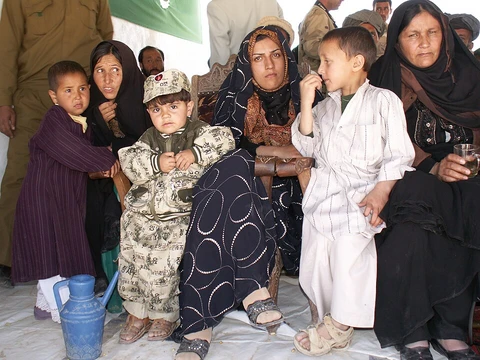
A clan is a group of people united by actual or perceived kinship and descent. Members may claim descent from a founding individual or apical ancestor who serves as a symbol of the clan's unity, even if lineage details remain unknown. Clans have existed in every country and preceded more centralized forms of community organization and government.
- field
- Social organization, kinship studies
- known_for
- Exogamy rules, kinship-based social units, totemic symbols
- etymology
- From Gaelic clann meaning 'children' or 'offspring'
Lore & Background
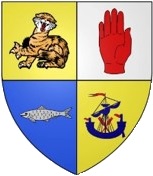
The word 'clan' derives from the Gaelic word clann, meaning 'children', 'offspring', 'progeny' or 'descendants'. None of the Irish and Scottish Gaelic terms for kinship groups is cognate to English clan; Irish and Scottish Gaelic clann means 'children', while fine means 'clan', teaghlach means 'family' in the sense of the nuclear family, and muintir means 'family' in the broad sense of 'kinsfolk'. In different cultures and situations, a clan usually has different meaning than other kin-based groups such as tribes and bands. Often, the distinguishing factor is that a clan is a smaller, integral part of a larger society such as a tribe, chiefdom, or a state. In some societies, clans may have an official leader such as a chief, matriarch or patriarch; or such leadership role is performed by elders. Examples include Irish, Scottish, Chinese, Korean, and Japanese clans, which exist as distinct social groupings within their respective nations. Traditional anthropological thought, as in the work of Gerardus van der Leeuw, classified non-human examples of such 'ancestors' (frequently animals) as totems. Many societies' exogamy rules are on a clan basis, where all members of one's own clan, or the clans of both parents or even grandparents, are excluded from marriage as incest. Members may identify with a coat of arms or other symbol.
Reader's Guide
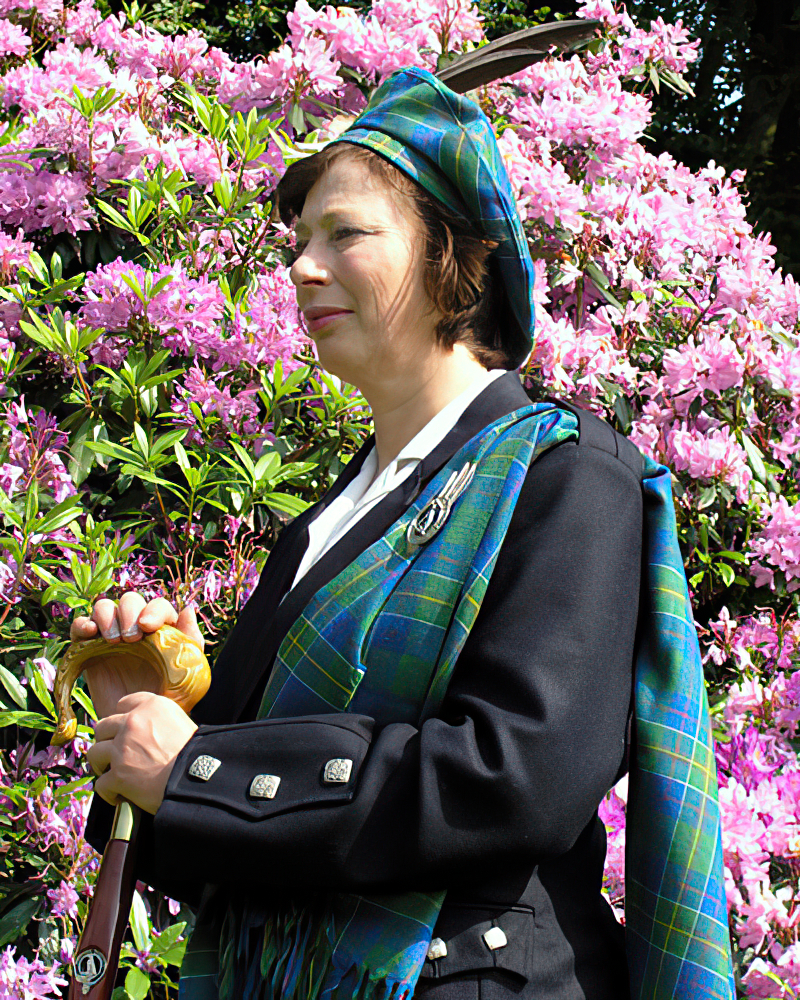
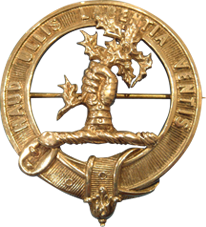
Clans represent one of the oldest forms of social organization, existing in every country and preceding more centralized forms of government. Their significance lies in structuring kinship, marriage, and political alliances across diverse cultures. Exogamy rules based on clan membership have historically regulated marriage, preventing unions within one's own clan or those of parents and grandparents. The concept of a common ancestor, whether human or totemic (such as an animal), serves as a unifying symbol. In post-Soviet countries, the term 'clan' is used colloquially for informal economic and political networks, reflecting assumptions of mutual support approximating kinship solidarity. Similar usage applies to organized crime groups. Scottish clans are notable for elaborate systems of tartans, insignias, and mottos, with official leaders called Chieftains or Chiefs. Irish clans (fine) included the chief and his patrilineal relatives as well as unrelated clients who assumed the leading lineage's name. Clannism, as in Somali qabiilism, is a system based on clan affiliation. In the African Great Lakes region, the clan is the oldest societal structure beyond family and direct lineage, with various vernacular terms such as ubwoko in Rwanda and ebika in Buganda. Matriclans exist in societies like the Serer, Haudenosaunee, Akan, Minangkabau, and Ejagham, where membership passes matrilineally.
Did You Know?
- Traditional anthropological thought, as in the work of Gerardus van der Leeuw, classified non-human ancestors (frequently animals) as totems.
- In some societies, clan membership is passed down matrilineally, forming matriclans among peoples such as the Serer, Haudenosaunee, and Akan.
- Polish clans differ from most others as they are a collection of families who bear the same coat of arms, as opposed to claiming a common descent.
Origins & the Architecture of Social Order
The Anishinaabe clan system, known as doodem, carries a deeply personal meaning: the word translates to the idea of one's heart being expressed, or having to do with one's heart, making each clan an extension of the family itself. According to oral and written tradition, the origins of these clans were bestowed upon the Getay-Anishinaabeg after the Earth was cleansed by water and the memory of the people had been wiped entirely clean. In that reset, the clans were given as a framework of social organization designed to provide strength and order. Today, seven general totems form this framework, each representing a core branch of knowledge and responsibility essential to society. The crane and loon serve as leadership, overseeing and guiding the people. The fish clans act as scholars and mediators, tasked with resolving disputes between the crane and loon. The bear function as both police and medicine gatherers, the martens as hunters and warriors, and the moose as mediators who embody peace. Together, these totems weave the social fabric through which politics, kinship, and identity are expressed.
Kinship, Conduct & the Prohibition of Harm
The doodem is not merely a label but a living bond of extended family. In Anishinaabemowin, the root ode' means heart, so to speak of one's doodem is to speak of one's innermost belonging. This kinship carries real consequences: marriage between members of the same clan is strictly forbidden, and no member may harm the animal that represents their totem by any means, as doing so is considered a grave bad omen. When two Ojibwe people meet, the traditional greeting is 'Aaniin odoodemaayan?' — What is your doodem? — a question that immediately establishes the social conduct between them as family rather than strangers. Traditionally, each band governed itself through democratic, independent councils composed of community leaders drawn from the families and clans, with the group often identified by its principal totem. The word odoodem is a dependent noun in the language: one says nindoodem for my clan, gidoodem for your clan, and odoodeman for his or her clan, embedding the relational context directly into the grammar of everyday speech.
The Flow of Wisdom Across Generations
For the Anishinaabe, the clan system is inseparable from how knowledge is acquired, held, and passed forward. Each clan contributes a key element to society, and individual members add to that collective body of understanding through lived experience. Rather than relying on a rigid student-teacher model, the pedagogy emphasizes personal experience gained through relationships with other clan members and the natural world. Knowledge that was previously unknown to the clan is absorbed into its collective store and then transmitted to future generations, sustaining what is described as the flowing of Nebwakawin, or wisdom, from one generation to the next. Despite sustained pressure from colonial societies in both Canada and the United States, a great deal of this Anishinaabe knowledge has survived and continues to be shared and built upon. Notable modern carriers of this tradition include Alexander Wolfe's Earth Elder 18 Stories: The Pinayzitt Path, Dr. Dan Musqua's The Seven Fires: Teachings of the Bear Clan, and Edward Benton-Banai's The Mishomis Book: The Voice of the Ojibway — publications that serve as vital bridges between ancestral teachings and the generations still to come.
The Great Totem Groups and Their Divisions
The full scope of Anishinaabe totems is vast. William Whipple Warren recorded at least twenty-one Ojibwe totems, while other chroniclers such as John Tanner listed fewer but different types, and at least fifteen distinct totems were documented among the Potawatomi. In practice, most Anishinaabe communities today carry only a handful of odoodeman, yet the overall system remains extensive. The totems are organized into major groups, or phratries, each charged with specific societal functions. The Bimaawidaasi group handles scouting, hunting, and gathering, and is subdivided into Hooves (moose, caribou, deer, elk, stag, antler, buffalo) and Little Paws (marten, beaver, muskrat, porcupine, raccoon, rabbit, mink, fox, skunk, squirrel). The Giishkizhigwan group is responsible for teaching and healing, encompassing fish, turtles, snakes, frogs, otters, and crabs. The Nooke group oversees defense and healing; the Bear clan within it was once so large that it was subdivided by body parts, such as the head, called Makoshtigwaan.
Gallery


Frequently Asked Questions
What is a clan?
A clan is a social group held together by genuine or assumed shared descent from common ancestors. It operates as a kinship-based unit of organization that existed before more centralized forms of government emerged.
What role does an apical ancestor play in a clan?
The apical ancestor is the founding figure from whom all clan members trace their lineage, acting as a symbolic anchor for group unity. In many cases, the specific genealogical details behind this ancestor are unclear or lost to time.
How are clans linked to exogamy rules?
Exogamy rules are a hallmark of clan-based societies, requiring individuals to form marriages outside their own kinship group. This practice reinforces social boundaries and creates alliances between distinct clans.
How old and widespread is the clan system?
Clans have been present in every country and represent one of the earliest forms of community organization. They predate more centralized governmental and social structures, making them a foundational unit in kinship studies.
More in Family And Kinship 1-15
Spotted an error? Know more?
This is a living reference — every entry is fact-audited, and reader corrections feed straight into our audit queue. Suggest an edit · See this site's audit record