Son
Male offspring, first-degree relative, central to family and inheritance.

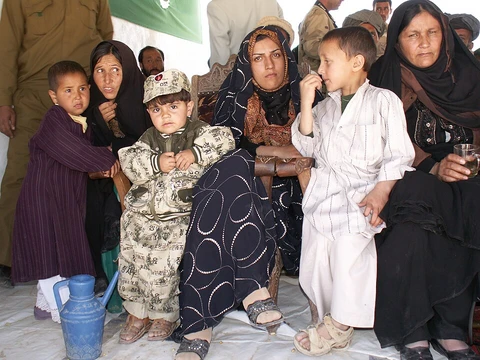
A son is a male offspring, a boy or a man in relation to his parents. The female counterpart is a daughter. From a biological perspective, a son constitutes a first degree relative.
- Definition
- Male offspring
- Biological relation
- First degree relative
- Female counterpart
- Daughter
- Social significance
- Higher value in pre-industrial and agriculture-based societies
- Inheritance role
- Customarily inherits estate before daughters in patrilineal societies
Lore & Background
In pre-industrial societies and some current countries with agriculture-based economies, a higher value was assigned to sons rather than daughters, giving males higher social status because males could perform farming tasks more effectively. In patrilineal societies, sons customarily inherit an estate before daughters.
Reader's Guide
The concept of a son carries deep social, cultural, and religious significance across many societies. In patrilineal cultures, sons traditionally inherit estates and carry on family names. In some cultures, the eldest son has special privileges, such as in Biblical times where the first-born male was bequeathed the most goods from his father. Japanese social norms indicate that parents are more likely to live with their eldest child if that child is a son, and are most likely to live with their eldest son even if he is not the eldest child. Among Christians, 'the Son' or Son of God refers to Jesus Christ, and Trinitarian Christians see Jesus as the human incarnation of God the second person of the Trinity, known as God the Son. Many surnames across cultures mean 'son of,' reflecting ancestry and lineage, with examples from Arabic (bin/ibn), English (son), Irish (Mac/Mc), and many other languages.
Did You Know?
- In China's one-child policy era, official birth records showed a rise in male births, attributed to sex-selective abortion and under-reporting of female births.
- In some cultures, the eldest son has special privileges, such as in Biblical times where the first-born male inherited the most goods.
- The Arabic word for son is ibn, and the opposite is abu, meaning 'father of,' used as a moniker upon the birth of one's first-born son.
- Many surnames worldwide mean 'son of,' including English 'son,' Irish 'Mac/Mc,' and Spanish 'ez.'
Frequently Asked Questions
Who is Son in the context of family and kinship?
A son is a male child or adult man defined by his relationship to his parents. He is the male counterpart to the term daughter.
What is Son's biological classification as a relative?
A son is classified as a first-degree relative, meaning he is directly connected to his parents through a single generational link.
How does Son differ from Daughter in kinship terminology?
The two terms are gendered counterparts of one another: son refers to the male offspring, while daughter refers to the female offspring. Both occupy the same positional slot in a family tree.
What inheritance role is traditionally associated with Son?
In patrilineal societies, a son customarily takes priority over daughters when receiving an estate or family property. This practice historically tied male offspring to the continuation of the family's material and social standing.
Why has Son carried elevated social significance in pre-industrial societies?
In agriculture-based and pre-industrial communities, sons were often valued more highly because they typically remained in the household to work the land and support aging parents. This made them central to both economic survival and the transmission of family identity across generations.
More in Family And Kinship 1-15
Spotted an error? Know more?
This is a living reference — every entry is fact-audited, and reader corrections feed straight into our audit queue. Suggest an edit · See this site's audit record